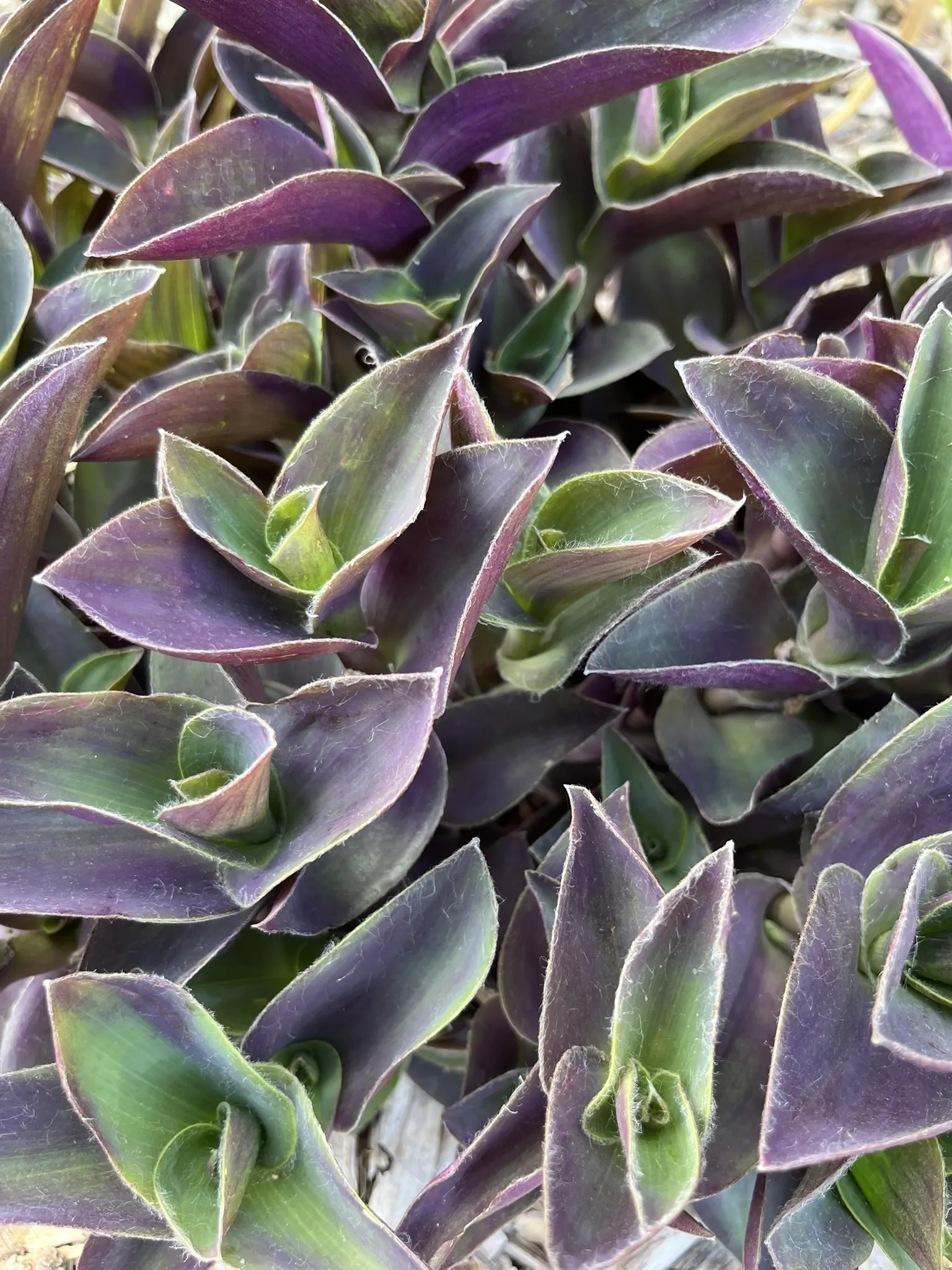
Purple Heart
(aka Spiderwort)
Tradescantia pallida
A striking, low-growing perennial prized for its deep purple foliage, Purple Heart brings strong color and texture to the landscape with remarkably little maintenance. Its fleshy, trailing stems spread readily and produce small pink to lavender three-petaled flowers during the warmer months. It works particularly well as a groundcover, edging plant, or spiller in containers. We carry both the traditional purple heart, with larger deeper purple leaves that tend to be further apart, and a different variety the San Antonio Botanical Garden referred to as "Diane," with denser foliage and a range of colors between purple and green (pictured to the left).
Purple Heart is especially well suited to hot, sunny locations. It is drought tolerant once established and roots extremely easily from stem cuttings, making it one of the simplest plants to propagate. In colder areas it is often grown as an annual, while in warmer climates it can return year after year.
Location: Great as a groundcover or border plant and does exceptionally well in pots, even in the heat.
Height: 12-16 inches, Spread: 1-2 feet per plant, but roots and spreads easily.
Light: Full sun to partial shade. Strong light produces the deepest purple foliage, while too much shade can cause the color to become less intense.
Soil: Adaptable to clay, loam, or sandy soil, but performs best in well-drained soil. Avoid consistently soggy conditions.
Water: Moderate while establishing; once established, Purple Heart is very drought tolerant. Allow the soil to dry somewhat between waterings rather than keeping it constantly wet.
Heat Tolerance: High.
Cold Tolerance: Low. Frost can damage or kill above ground growth. Plants are reliably perennial in warmer climates.
USDA Hardiness and Overwintering: Generally zones 8–11. Mulching well over the winter will ensure better return in the spring if temps occasionally get into the teens in zones 8 or 9.